Photos: Roman Pawlowski
GEO magazine releases a fascinating new article about why the German Archives use microfilm for the long term storage of their culturally important historic documents.
Extract taken from GEO magazine, May 2026
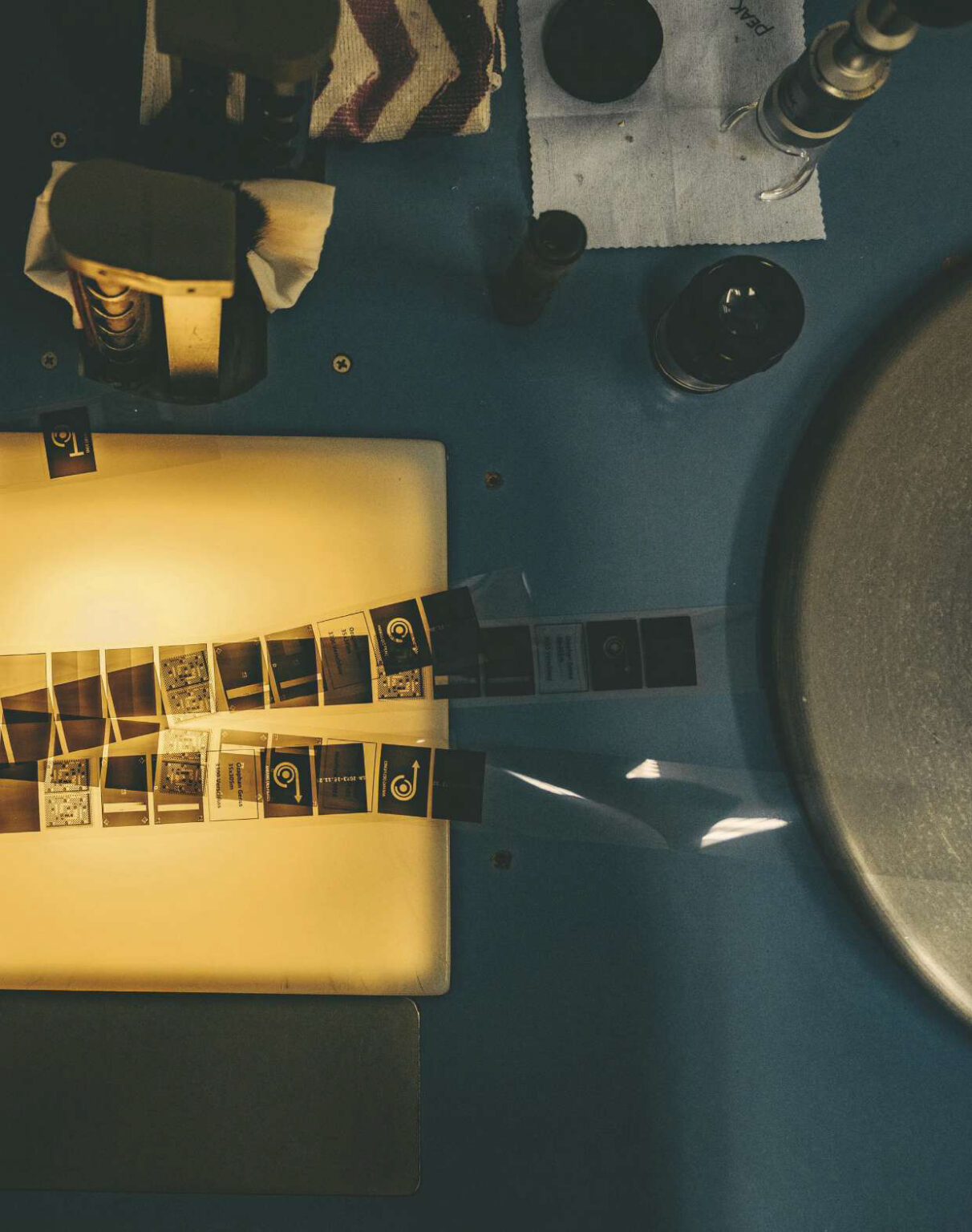
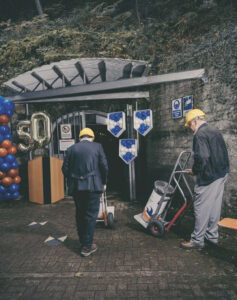
The central archive in the Barbara Tunnel recently celebrated its 50th anniversary. From all German digitisation centers, microfilms are brought together at Hofmaier’s company in Munich to await storage at the tunnel. Hofmaier was commissioned to examine how it might be possible to preserve Germany’s cultural heritage on film. The storage medium in the Barbara Tunnel was meant to safeguard memory for as long as possible, to function independently off the power grid, to be resistant to electromagnetic waves, and to require no maintenance-dependent playback devices. Microfilm is the medium that Hofmaier chose. It saves space, and, above all, it is durable. Under the right conditions, the microfilmed documents should remain readable for at least 500 years. It can even be read without a device when captured on a high-resolution device and then magnified.
In a report, Hofmaier pointed out that while the air in the tunnel, at a constant ten degrees Celsius, is favourably cool, it’s roughly 80 percent humidity is far too damp. So the films are not stored directly in the tunnel air, but inside barrels made of heavy steel, with tightly bolted seals.
Inside them, the microfilms are enclosed together with air at 35 percent relative humidity. A backup of German history and culture is stored in 1,600 of these steel containers.
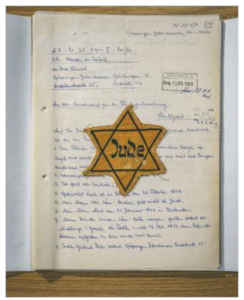
Hidden from view, the barrels safeguard the handwritten scores of Johann Sebastian Bach, the architectural plans of Cologne Cathedral. One contains the treaty texts of the Peace of Westphalia from 1648; another holds the document appointing Adolf Hitler as Reich Chancellor. Somewhere there is also the oldest record: a deed issued by Charlemagne granting ownership of the monastery of St. Emmeram, dating back to the year 794. After reunification, the Unification Treaty also made its way into the belly of a barrel; 244 million images from the archives of the GDR followed it into the mountain. A good 1.3 billion documents of German history and culture are stored here. At three other locations – in Weimar, Potsdam, and Münster – his colleagues also produce microfilm for the tunnel.
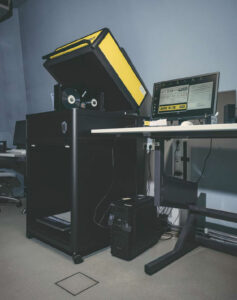
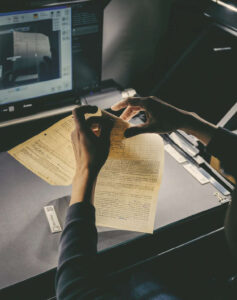
The room is darkened. By remote control, senior technician Laslo Capo triggers a camera above the table. The sorted images end up in the archive’s digital collection. They are transferred to microfilm in a neighboring room. There stands an SMA51 Archive Writer. Capo carefully opens the device. At the bottom, an 8K monitor lights up, displaying the digitised documents. Microfilm, 35 millimeters wide and up to 450 meters per roll, flows past a lens in the upper part of the box, capturing each scanned newspaper page, and finally winds itself into a light-tight cassette. Capo removes the cassette from the box and carries it into the photo lab. There, the film passes through a kind of chemical washing line. The polyester film is coated with silver halides embedded in a layer of gelatin. Light has activated these crystals, leaving behind an invisible, latent image as silver atoms. In the developer solution, this becomes metallic silver.
Even if the original someday crumbles, its contents will still be readable on microfilm. In the sum of such records, one hopes, the course of history will be preserved – this was the idea behind the federal microfilming program.
Even now, the Barbara Tunnel is saving memory from loss. Weber recalls the Historical City Archive in Cologne, which collapsed in 2009. Large parts of the archival materials were buried. Thanks to the barrels in the tunnel, however, many of the destroyed documents survived as copies: millions of individual records had already been preserved on microfilm.
Have you read our own blog post about the Barbarastollen underground tunnel? If not, you can do so by clicking HERE.