
Monthly reports on archive storage temperature and humidity can show the same figures all year, while short spikes hidden in the averages slowly wear a collection down. Six questions for your storage provider will tell you whether it is happening to yours.
A store can report 18°C and 45% relative humidity every month and still have had:
- four hours at 24°C during a summer heatwave, while the air conditioning struggled
- a night when a dehumidifier failed and humidity reached 62% before anyone noticed
Both events put the collection under stress, and neither shows up in the monthly figures.
Why short spikes add up to lasting damage
Paper, parchment, bindings and photographic materials all react to the air around them. As humidity rises and falls, they take in and give off moisture, swelling and shrinking a little each time. One cycle does little harm, but the damage builds up over years.
Heat speeds up chemical decay, which is why cooler, steadier conditions help collections last longer. Even microfilm’s 500-year life expectancy rating, under the international standard ISO 18901:2010, applies only to properly stored film.
None of this is visible while it happens. Material can look fine for years, until someone handles it for research or digitisation and finds it brittle.
What happens between the readings
How often a monitoring system takes readings decides what it can see. A two-hour drift to 21°C shows up in hourly data but disappears in a daily average.
A ten-minute humidity spike when equipment switches on can fall between two hourly readings and never be recorded at all. A report built from that data will look stable, because the spike never reached it.
Six questions to ask your storage provider
A provider’s answer to “Is your store stable?” tells you little. These questions ask for evidence, and the answers should come from the monitoring data:
- 1What is the highest temperature you recorded in the last 12 months, and how long did it last?
- 2What is the biggest humidity swing you recorded in the last month?
- 3How often do your sensors take a reading?
- 4How often do conditions move outside your stated range, and for how long?
- 5When did an environmental alarm last go off, why, and what did you do about it?
- 6What backup is in place if a system fails?
THE TEST
If a provider can't answer with figures from its own records, you don't yet know how stable its store is.
What a well-controlled store looks like
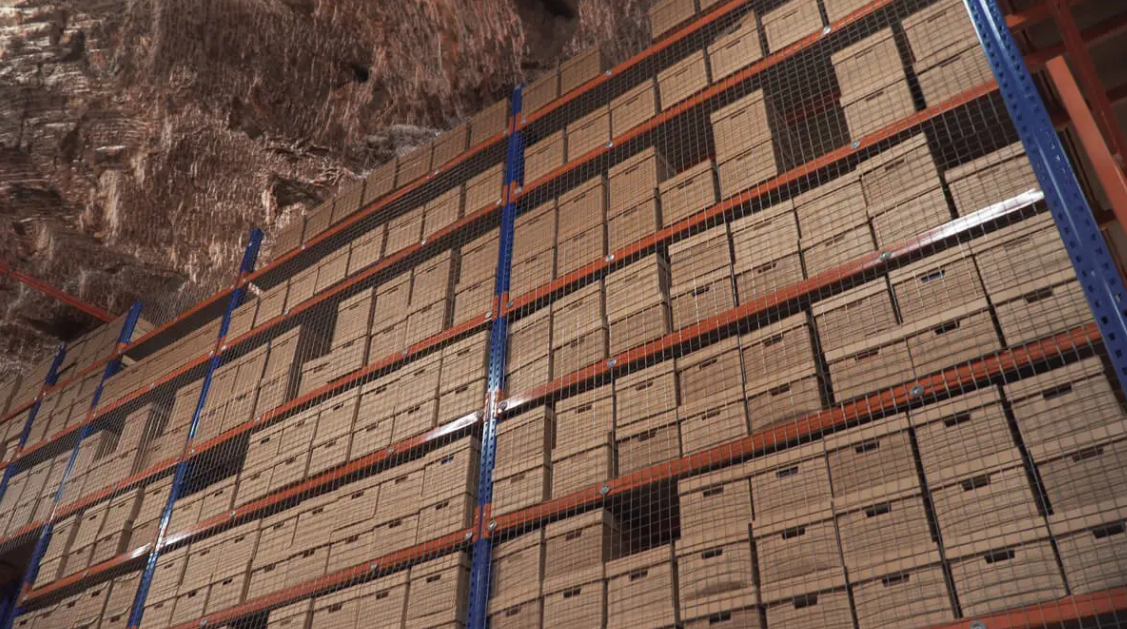
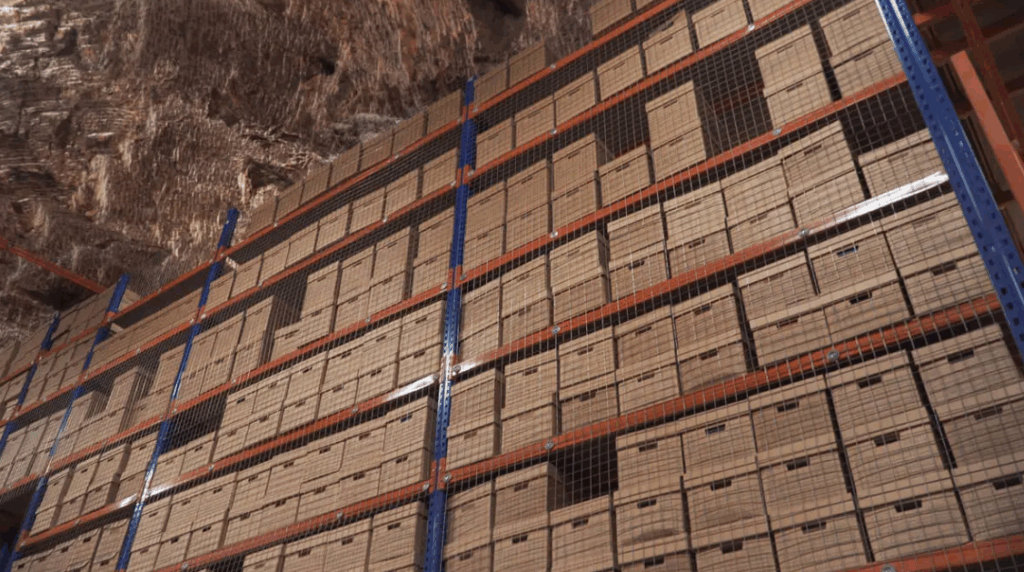
Deepstore, the underground store we partner with for long-term storage, is 150 metres below ground in a salt mine at Winsford, Cheshire. At that depth, its conditions stay steady all year round.
14°C
steady temperature, with minimal fluctuation
50%
relative humidity, within plus or minus 5% a day
35km
of The National Archives' records stored there
Since 2004
used by The National Archives
In 2020, after a full tender, The National Archives awarded Deepstore a new 15-year contract.
A limit such as “plus or minus 5% on any given day” can be checked against the monitoring data. Ask any provider to state its limits in the same way.
Conditions matter while a collection is away from its store
The Royal Navy’s WWII Admiralty Diary survives in only two copies. The one we digitised runs to 204 tightly bound volumes and over 60,000 pages, on wartime paper that had grown brittle with age. We kept the volumes in climate-controlled facilities throughout the project.

Volumes of the Royal Navy’s WWII Admiralty Diary.
"Releasing valuable and rare documents from the clutches of their protective custodians is often difficult but the staff at Genus understood the misgivings of my colleagues and fears were put to rest."
Christine Harper, Royal Navy Historical Branch
If your collection is going out for digitisation or conservation, ask where it will be kept and in what conditions. The six questions above apply to any supplier who holds it, for any length of time.
Before any scanning starts, you should be able to answer these:
Get a specialist view of your storage
If you're not sure what your current storage is doing between reports, our Heritage Consultancy can help you find out and decide what to do next. For long-term storage, see How Deepstore works.
Talk to a heritage specialistABOUT GENUS
A family business since 1974, Genus has spent more than 50 years preserving collections, from microfilm to digitisation and secure storage, for clients including the Royal Navy, the British Library, the Wellcome Trust and Lola Cars.
