
Since 2023, our technicians at Genus have been exploring what is possible when skilled hands meet advanced capture technology. Working with Digitisation.IO and Rigsters, we use the Arago 3D photogrammetry rig to create highly detailed, interactive 3D models. These models can bring viewers closer to a fragile artefact, create a comprehensive record of an object’s condition or help an exceptional item reach a wider online audience.
Over the past year, updates to the Arago hardware and advances in Reality Scan have opened new possibilities.
Our technicians have tested, refined and rebuilt the workflow around those developments, drawing on their experience of handling cultural heritage objects and solving practical capture challenges. The result is a faster, more reliable process that improves quality while reducing the cost to our clients.
How our technicians improved the workflow
The story began with a fresh look at every stage of the process. Rigsters had introduced new functionality for the Arago system, including improved image-capture calculations and more capable pre-scan tools. Rather than simply adopting the updates, our technicians put them through practical trials, comparing results and identifying where careful adjustments could make capture more accurate and consistent.
One of those trials involved adding additional markers known as AprilTags.
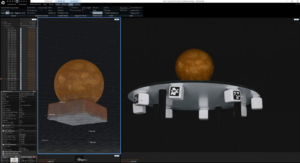
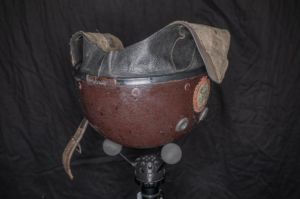
The Arago turntable already includes AprilTags and circular markers, but they are visible only from above. By placing additional tags around an object, our technicians found they could give the processing software reliable reference points from more camera angles, helping images align with greater confidence.
They also paid close attention to the capture environment. A simple cloth placed around the base of the Arago increased contrast and improved pre-scan performance. It is a small intervention, but it reflects the value of an experienced technician who can recognise where a practical change will make the technology work harder.
The same attention was applied after capture. Our team refined the way raw images are processed in Lightroom, making optimisation and adjustments to highlights, shadows and texture quicker and more consistent.
Once the experiments had been assessed and the strongest improvements brought together, the team tested the complete workflow across nine objects in two days. Each item required an average of 594 images, yet the average capture time was just 54 minutes. For clients, that technical expertise translates directly into efficient capture, dependable quality and better value.
A clearer way to price your project
The improved workflow has enabled us to reduce the cost of 3D photogrammetry and make our pricing easier to understand. Our technicians assess each object according to its material, shape, condition and intended use, then place it in one of three categories: Easy, Complex or Bespoke.
Easy items
Some objects are naturally well suited to 3D capture. Matte, textured surfaces such as stone or wood give the camera plenty of detail to recognise, as do objects with strong colour variation. Medium-sized items, roughly the size of a shoebox or tissue box, are particularly straightforward when they are stable enough to be repositioned safely. Our technicians still plan every angle carefully, but these characteristics usually support a smooth and efficient capture.
Complex items
Other objects call for more technical judgement. Fine or fragile components, such as the details on a model car, can be difficult for a camera to resolve. Reflective surfaces may introduce unwanted glare, while an unusual shape or physical fragility can limit the angles from which an object can be photographed. In these cases, our technicians adapt the lighting, camera positions and handling plan to protect the object and capture the detail needed for a strong result.
Bespoke workflows
Some projects do not fit a standard route, and that is where a bespoke approach comes into its own. An object that cannot be moved may require a completely different capture sequence, while a model intended for 3D printing may need its images processed with a different outcome in mind. Through expert consultaiton, our technicians work through these requirements with you, developing a method that respects the object and supports the purpose of the final model.
Exploring Gaussian splatting
Alongside these workflow improvements, our technicians are investigating another fast-moving area of 3D capture: Gaussian splatting. The technique can reproduce real-world scenes with striking detail, recording not only their geometry but also qualities such as lighting and reflection. Using recent advances in machine learning, a Gaussian splat can be created automatically from a set of photographs or video.
Traditionally, meshes have been the standard way to represent objects in 3D, using triangles to describe an object’s surface.
Splats take a different approach by representing volume. They are built from 3D Gaussians, each with its own position, size, orientation and colour. It can help to picture them as soft points in space. When enough are combined, they can describe a shape or scene with remarkable realism. Their name comes from Carl Friedrich Gauss, the mathematician associated with the normal distribution, or bell curve.
Gaussian methods have been used in rendering since the 1990s, but techniques for fitting them automatically to scenes began to emerge in 2023. Progress has been rapid. It is now possible to capture a series of images or a video on a smartphone and turn them into a highly lifelike 3D model in seconds.
At Genus, our technicians are now exploring this technology.
Our focus is on objects that are too large or too small for the Arago, and on understanding where Gaussian splatting can complement rather than simply replace established photogrammetry methods.
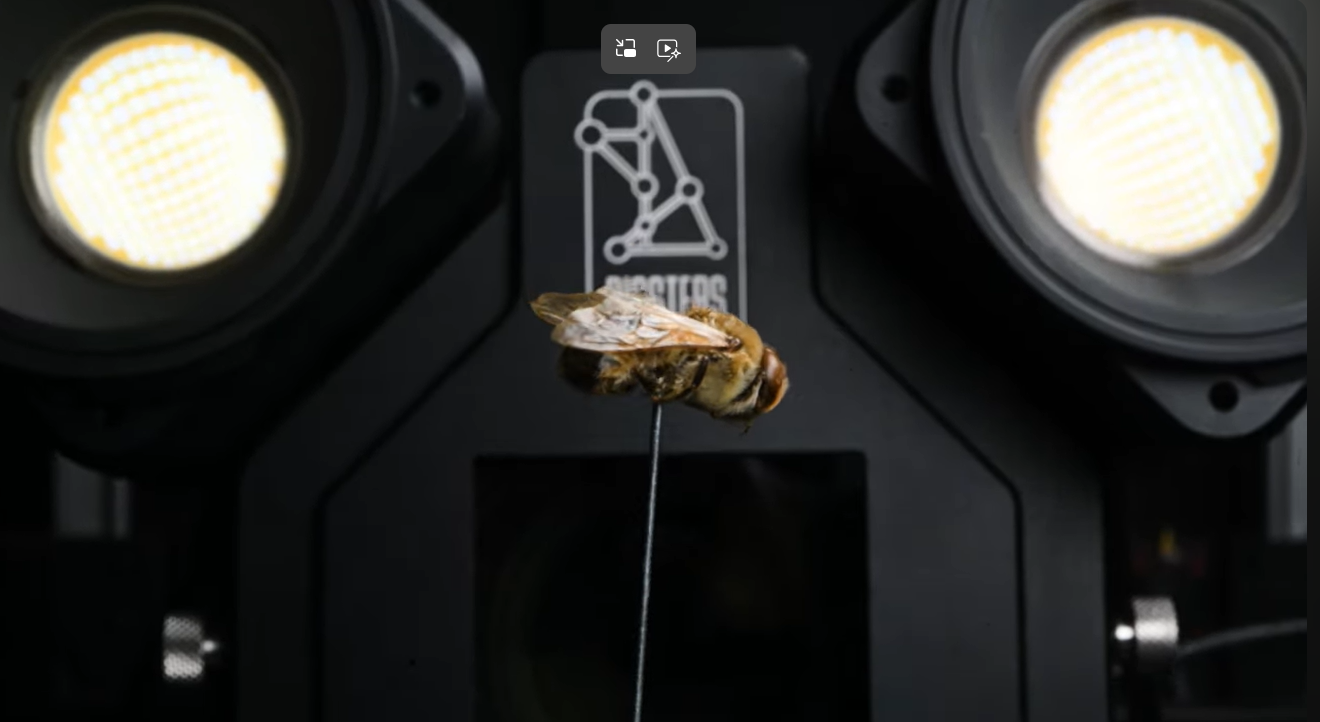
A striking example of what can be achieved at the smallest scale comes from Rigsters, who captured a bee in such fine detail that individual hairs are visible!
It is exactly the kind of result that encourages our team to keep experimenting with the cutting edge of technology.
Want to see Rigster’s finished model? Click HERE.
Next Steps
What began as a series of practical trials has become something much more exciting. By testing new hardware, refining the smallest details of the capture environment and exploring techniques such as Gaussian splatting, our technicians are steadily expanding what 3D digitisation can achieve here at Genus.
There is still plenty more to discover. As capture technology develops, we will continue experimenting, learning and adapting our approach to suit everything from tiny, intricate specimens to objects too large for the Arago rig such as furniture, fossils or even buildings.
Whether the aim is to preserve a fragile artefact, share a remarkable collection online or create a model for an entirely new purpose, the next chapter will always begin in the same way: with an object, a challenge and the question, ‘What if we tried this?’