
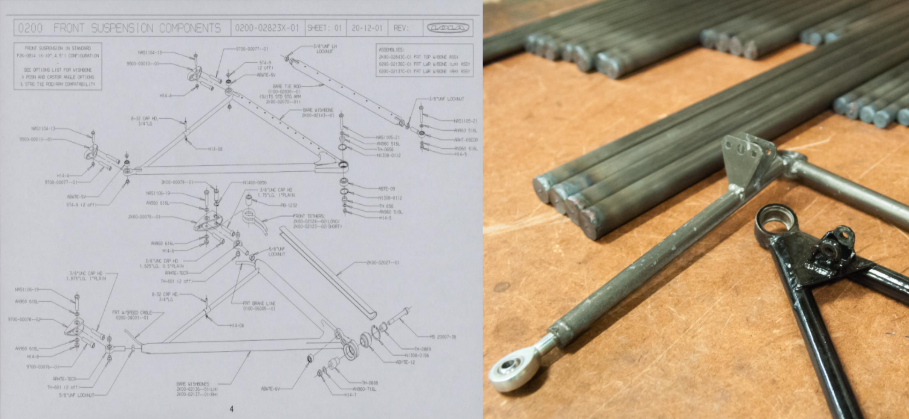
The work done before the first scan decides what a digitisation project costs, and whether anyone can find what it produces. The Lola Cars technical archive shows what that work involves.
How the Lola Cars archive became usable
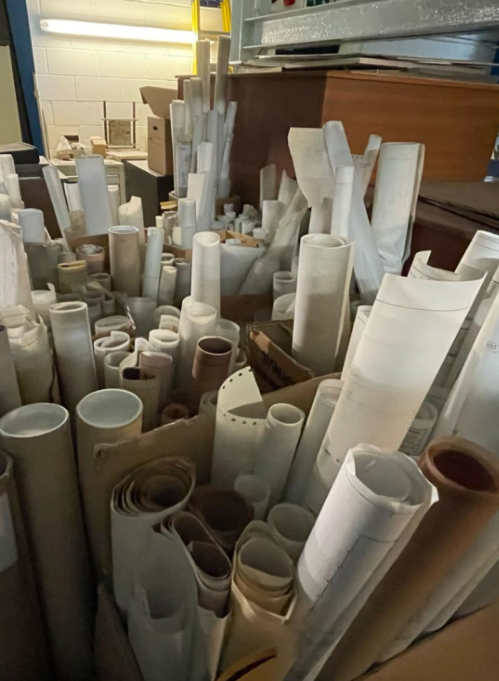
Lola Cars, founded by Eric Broadley in 1958, is Britain’s longest-serving racing car manufacturer. When Lola asked us to help, its technical archive was rapidly degrading and generally unusable. Storage conditions were poor, packaging was inadequate or missing, and there was no filing system to speak of.
Before any scanning, our team counted and sorted the whole archive: 36,837 items. Items at risk were set aside and profiled by the kind of damage they had. We brought in a conservator, Catt Thompson-Baum of CTB Heritage Consulting, to repair damaged drawings so they could be digitised safely.
36,837
items counted and sorted before a single scan
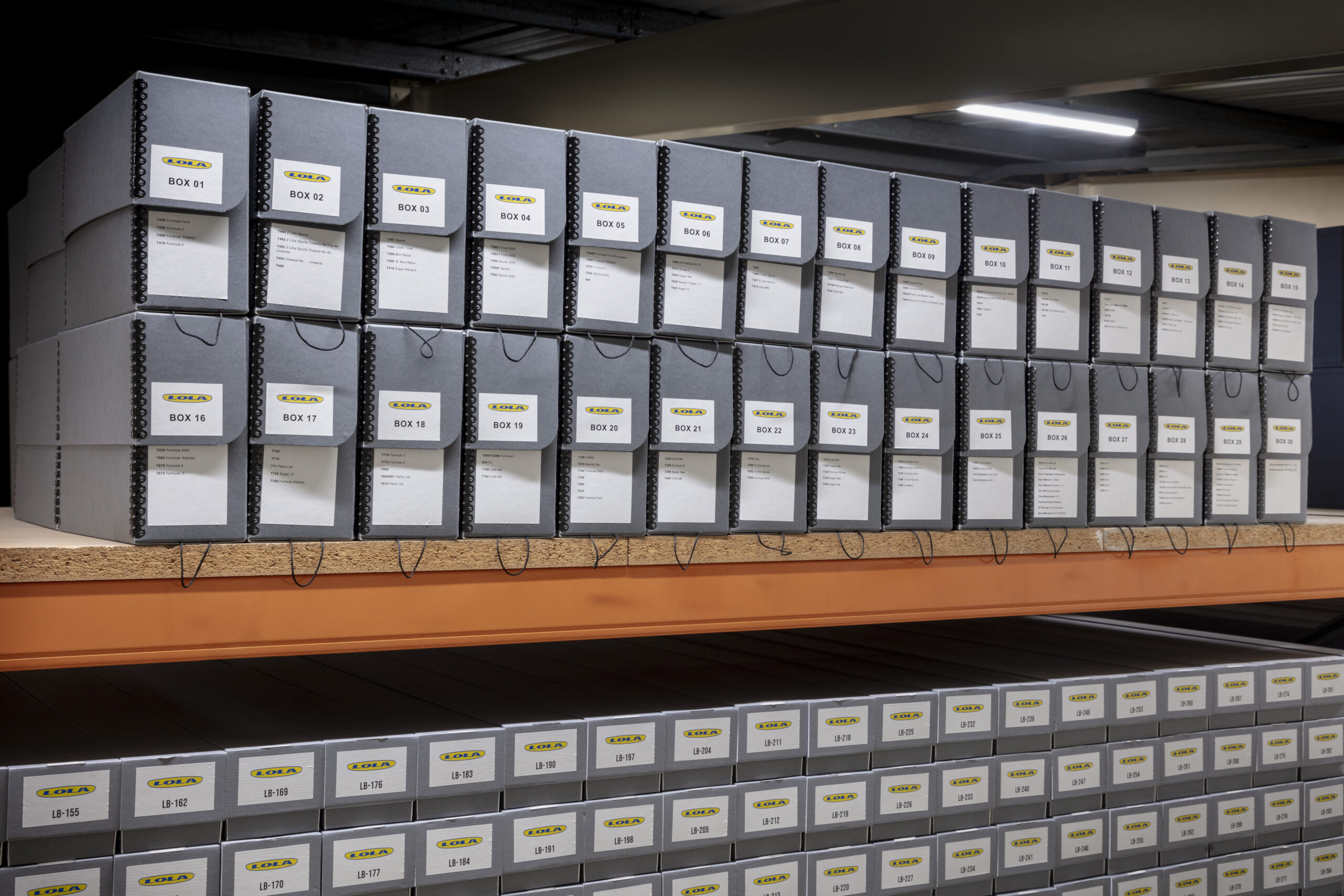
We rehoused the archive in custom-made acid and lignin-free boxes, each labelled with a unique ID. With the archive audited, stabilised and correctly housed, we paused the project to give Lola an accurate quote, because we would always rather be certain on costs than estimate them.
Once the drawings were digitised, the files were organised and tagged by details including part number, model number, drawing title and date. Lola’s archivist, David Freestone, described the result:
"For the first time in Lola's nearly 70-year history, there is a full understanding of every single technical drawing held in the archive."
David Freestone, Archivist, Lola Cars
The mistake is to treat digitisation as a scanning job
A scanning job is judged on its output: resolution, colour accuracy, file formats and delivery date. A project can pass every one of those tests and still leave people unable to find what they need.
The Lola project shows the rest of the work: knowing exactly what you hold, what state it is in, what it will cost and how people will look for it. The last of these is the easiest to get wrong, because its effects take years to show.
What a description adds to a scan
A scan is a record of what an item looks like today. Its description, or metadata, records how the item fits with everything else: what it is, what it relates to, why it matters and the words someone will use to find it.
In the Lola archive, a drawing’s part number and model number connect it to the part and the model of car it belongs to. The box ID, captured during digitisation, connects each file to the box that holds its original, so Lola can find the physical drawing if it needs to. Today, in David Freestone’s words, the archive supports “owners of Lola race cars across the globe”.
Descriptions also age. A catalogue template filled in today can stop making sense within ten years, once the person who understood its logic has left and the records have moved to new software. A description that records why an item matters, and how it connects to the rest of the collection, stays useful through those changes.
Why the problem stays hidden for years
A poorly described collection looks finished. Every field in the catalogue is filled in and the project closes on budget. The problem appears later, when a researcher searches in their own words and gets nothing back, even though the item is there.
At that point, only people who think like the team that catalogued the collection can find things in it. Fixing that means going back through the collection, and often the originals, a second time.
The question to ask before you scan
Descriptions are added after scanning, but the decisions behind them belong at the start. When planning a digitisation project, ask one question before any budget goes on scanning:
The one question
Will someone who doesn't know this collection, using the words they'd naturally use, still find what they need in five years?
If you can’t answer yes with confidence, you’re not ready to scan. Work through these first:
- 1What words will researchers and other users search with?
- 2How different are those words from the ones your team uses?
- 3Which links between items are worth recording?
- 4What context should travel with each file?
- 5How will someone get from a file back to the original?
Get the decisions right before you scan
Our Heritage Consultancy helps you decide what to digitise first and how it should be described, before any money goes on scanning.
Talk to a heritage specialistYou can also read the full Lola Cars case study
ABOUT GENUS
A family business since 1974, Genus has spent more than 50 years preserving collections, from microfilm to digitisation and secure storage, for clients including the Royal Navy, the British Library, the Wellcome Trust and Lola Cars.
