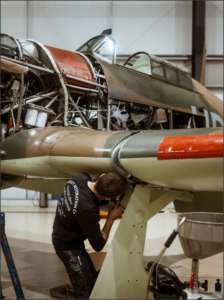
With a history going back to the 1980’s, two renowned aircraft service businesses; Historic Flying Ltd and Propshop Ltd combined to form Aircraft Restoration Company, commonly known as ARCo.
Specialising in restoring and maintaining classic aircraft, the Spitfire features strongly in an illustrious catalogue with over a third of the worlds’ flying aircraft passing through its hanger. The highly skilled team have restored and maintained P-51 Mustang, Messerschmitt Bf109, Focke Wulf FW190, Bristol Blenheims and even an Avro Lancaster has been through the workshop.
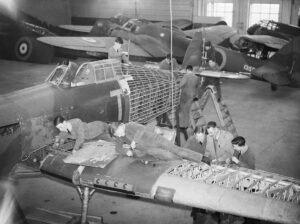
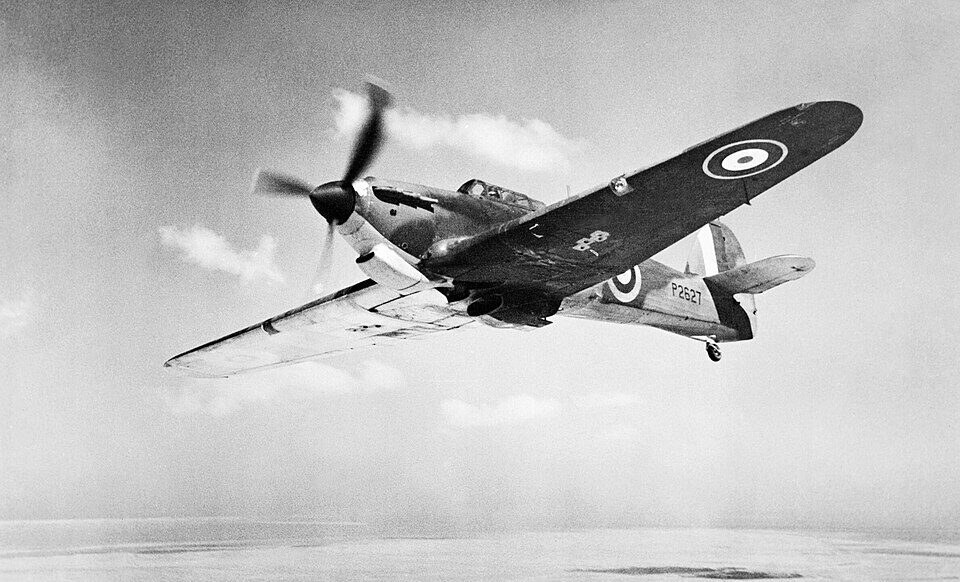
The Hawker Hurricane was the unsung hero of the RAF in WWII. Pilots flying this machine destroyed more enemy aircraft than the Spitfire and ground-based anti-aircraft fire combined.
The design comprised a simple, rugged and cost effective wooden fuselage rear section covered with doped linen which would prove easy to repair in battle. This traditional fuselage was coupled to a modern stressed skin aluminium wing by the designer Sydney Camm together with an aluminium cockpit and engine frame.
ARCo were approached by a client who wanted a Hawker Hurricane restoring to flying status but unlike Spitfire, a complete set of plans is not readily available. Authenticity is paramount in aircraft restoration and no chances can be taken with this or safety and so after searching the archive, ARCo managed to locate a collection of drawings on microfilm aperture card and so needed to find a supplier who could digitise them to a high standard.
Shaun Richardson, Stores, Procurement and Production Control at ARCo, began the search for a Company with experience of microfilm and quickly identified Genus as the experts. “Genus clearly knows microfilm” says Shaun.
“With over 50 years of experience of producing, supplying and scanning microfilm, it was clear they were the go-to Company for this work”
Microfilm aperture cards were a commonly used method of archiving large engineering drawings. A drawing was photographed using high resolution microfilm and the resulting 35mm image was mounted onto a single card. This card could then be either printed to show the drawing details, or punched with a Hollerith code that enabled the index information to be read automatically by machine. The space saving was huge with large A0+ drawings fitting on a card measuring just 82 x 187mm.
The cards were taken to Genus in Warwickshire where their 5 studios digitise Cultural Heritage content ranging from Newspapers, Books, Photographic film through to all types of microfilm and fiche. Chris Elwell, Genus General Manager, picks up the story.
“The cards were from a mixture of sources, but were in very good condition, being both clean and undamaged. On closer inspection, the original filming was of good quality – albeit with some quite damaged original drawings – with even illumination and good exposure. The film had clearly been stored well with no evidence of vinegar syndrome or any other degradation.”
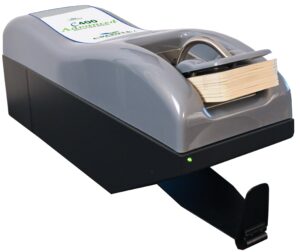
The cards could then be scanned via our Wicks & Wilson C400 production aperture card scanners. These devices are the workhorse card scanners for any production environment, with a throughput of up to 400 cards per hour, our studio has 11 of these devices which makes easy work of most projects.
“Given the age of the drawings, we were doubtful that a good enough image would be possible to extract from the aperture cards” continues Dave Oxley, the engineer responsible for the Hurricane project. “It was important for us to be able to read the drawings and print them out if necessary”
Although there are almost 20 Hurricanes still in flying condition, and many more non-airworthy, details of the construction of hard-to-see areas are few. ARCo were hopeful that the aperture cards would reveal some of these details.
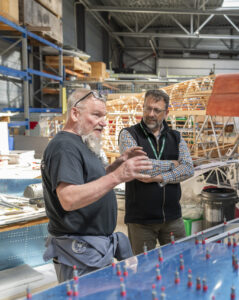
Dave continues “The drawings revealed details that we were unaware of. For example, details of how the wing spars are constructed and the rivet details that were previously unknown to us. Having this information means we can carry out the refurbishment to the original specifications knowing that the authenticity of the airframe is uncompromised”
This project highlights the benefits of archiving to microfilm. While the original drawings – if they exist – will be too fragile to handle, the microfilmed images have survived in excellent condition and continue to provide information to engineers almost 90 years after they were originally drafted. The cards have now been returned to safe storage to come out again if needed again and this information is assured to last well into the future. With modern scanning and printing capabilities, the images can be accessed and shared as necessary with ease.
Although Genus played a tiny role in this project, we are immensely proud to be linked in helping another iconic RAF airplane take to the sky.