The Challenges of Nuclear Decommissioning
Decommissioning a nuclear power station is one of the most complex engineering projects imaginable. Across the UK, 36 nuclear facilities have already been retired, with a further five expected to cease operation by 2030. Yet despite decades of work, only the Imperial College reactor site has been fully decommissioned under modern regulatory controls (ONR, Feb 2024).
The process is necessarily slow and meticulous. Engineers must balance safety, precision, and efficiency while working with technologies and infrastructure that may not have been touched for over half a century. Three major challenges consistently emerge throughout decommissioning projects:
- Complexity and safety
- Documentation and knowledge management
- Funding and cost control
Few sites illustrate these challenges more clearly than Dounreay on Scotland’s north coast.
Aging and Inaccessible Documentation
Solving these technical challenges depends on access to accurate historical information.
Within every nuclear facility are millions of pages of reports, blueprints, maintenance records, operational procedures, and safety documents. Together, they tell the story of how the plant was designed, modified, operated, and maintained throughout its lifetime.
These records are often the key to understanding how structures can be safely dismantled today.
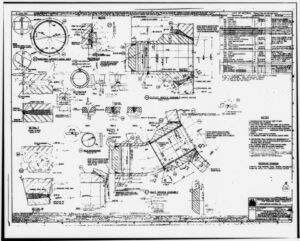
However, managing this information presents challenges of its own. At Dounreay alone, archive managers’ report that the site’s document collection contains approximately 250 tonnes of records stretching nearly four kilometres if placed end to end.
Much of this information is stored in aging archives, outdated formats, or disconnected systems. Critical knowledge can become difficult to locate, creating delays, increasing costs, and introducing additional risks.
As a result, decommissioning can become a form of nuclear archaeology, where engineers spend valuable time searching for a single drawing, schematic, or maintenance record before they can proceed safely.
When access to information is slow, every task becomes slower. Costs rise, productivity falls, and the potential for critical details to be overlooked increases.

Complexity & Safety
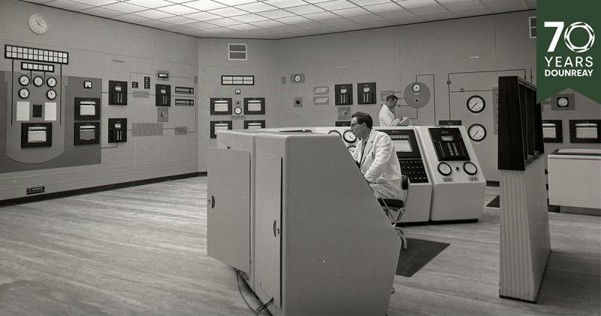
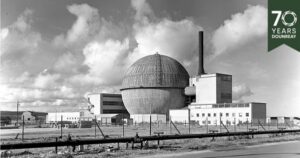
Established in 1954 as a centre for fast breeder reactor research (fast breeder reactors), Dounreay represents the ambitious optimism of Britain’s early nuclear programme. Like many facilities built during the industry’s formative years, the site was designed with little consideration for how it might one day be dismantled.
As a result, today’s decommissioning teams face highly complex and often unprecedented challenges.
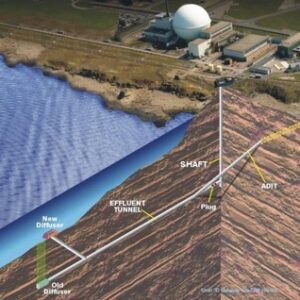
One of the most infamous examples is Dounreay’s 200-foot waste shaft, which was historically used for radioactive waste disposal. In 1977, reactive chemicals mixed with radioactive materials within the shaft, causing an underground explosion. Decades later, engineers continue to manage the consequences of this event.
The site has been described by the Institution of Mechanical Engineers as “Europe’s most complex nuclear clean-up’’ . Much of this complexity stems from the need to safely recover, transport, and store hazardous materials for which no established procedures exist.
Modern engineers must solve these unique problems while working under significant pressure to minimise environmental risk and ensure the safety of workers and surrounding communities.
The Benefits of Genus Digitisation
This is where Genus is making a difference.
At the heart of many nuclear decommissioning challenges lies a common issue: access to information. The knowledge needed to make safe, informed decisions often exists, but it remains buried within vast physical archives.
Genus is working with a leading nuclear restoration company to unlock that knowledge.
Drawing on more than 50 years of expertise in microfilm management and document digitisation, Genus is transforming decades of nuclear plant records in the form of Aperture Cards into searchable, accessible digital archives.
The advantages of digitisation are substantial:
Improved Efficiency
Engineers can locate critical information in seconds rather than spending hours or days searching through physical archives.
Enhanced Safety
Important operational details, maintenance histories, and technical specifications are readily available, reducing the risk of vital information being overlooked.
Better Cost Control
Efficient access to information helps streamline workflows, minimise delays, and reduce the likelihood of costly errors and budget overruns.
Long-Term Preservation
Digitisation protects valuable records from physical deterioration, ensuring they remain accessible for future generations.
Knowledge Retention
Historical information can be shared more effectively across organisations, allowing today’s engineers and nuclear specialists to learn from decades of accumulated expertise.
Simply put, better-informed engineers make better decisions. When information is easy to access, projects run more efficiently, risks are reduced, and budgets go further.