The Rootes Group Legacy
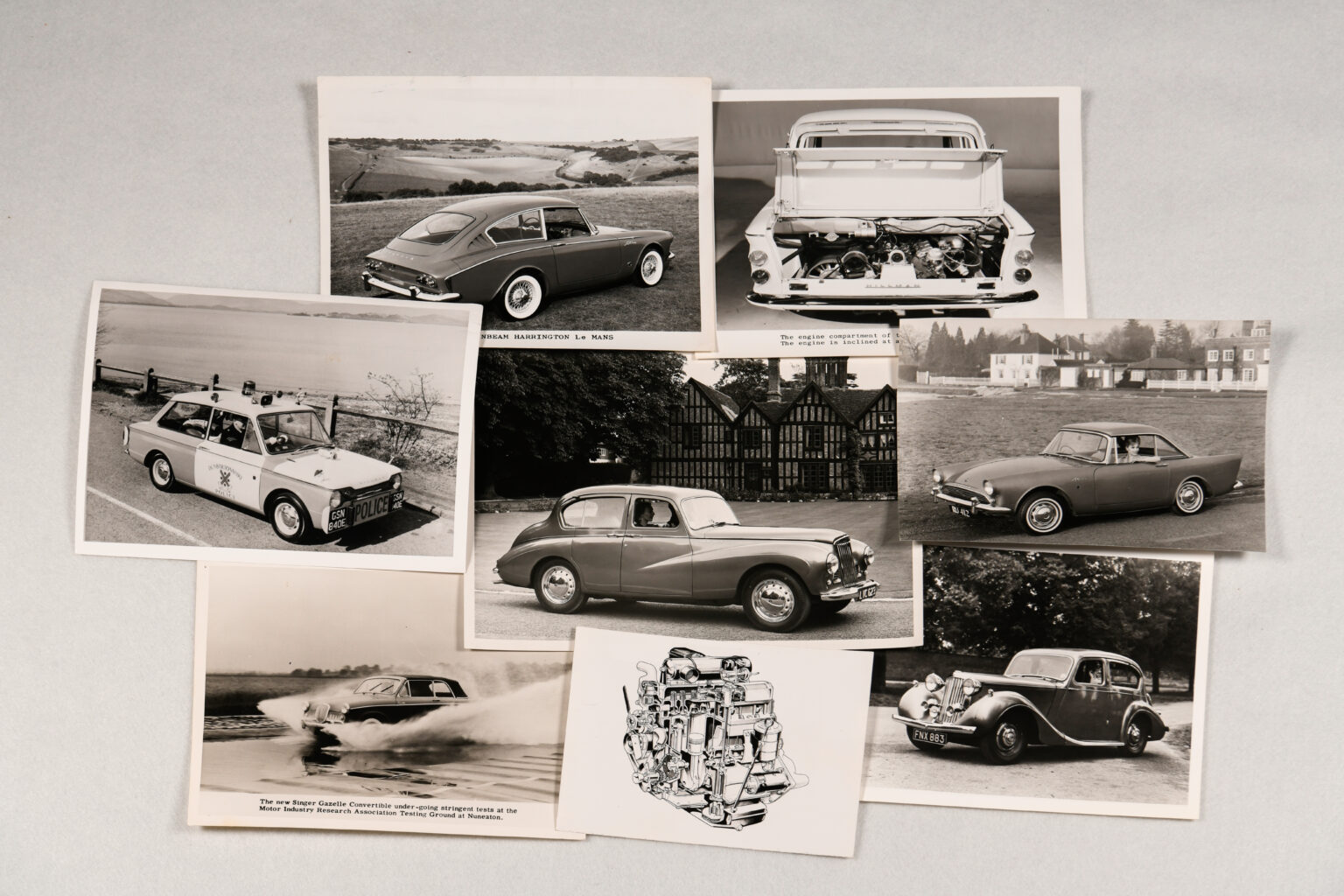
The Rootes Group began in 1895 as a small Kent cycle repair shop and, under brothers Billy and Reggie Rootes, later growing into one of Britain’s great industrial success stories, owning marques such as Hillman, Humber, Sunbeam, Talbot, Singer and Commer.
At its height, Rootes was not just a carmaker but a symbol of British innovation and ambition, exporting vehicles across the world, achieving rallying triumphs and employing tens of thousands who depended on its factories. Furthermore, During World War II, the group became a cornerstone of the nation’s survival by production of variety of armaments such as the notable Bristol Blenheim bomber said to have produced “about 16 per cent, or one in every seven of all bomber aircraft made in the UK up to June 1944″. For their contribution during the war both brothers were knighted.

Post-war, Rootes helped rebuild Britain’s reputation overseas, establishing plants in America, Canada and Australia plus providing families with cars that became part of everyday life. However, in 1964 Chrysler bought into Rootes, eventually taking full control in 1967. By 1978, the group was sold to Peugeot, marking the end of Rootes as an independent company.
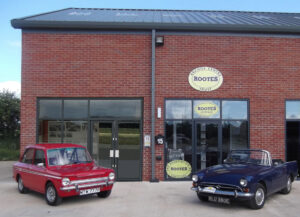
Despite this decline, Rootes’ story remains one of resilience, national service and cultural significance. As the page turns on a vital chapter in Britain’s motoring and industrial heritage we now look to The Rootes Archive Centre Trust (RACT) to preserve and promote the heritage of the Rootes Group, once one of the UK’s most significant motor manufacturers.
The Rootes Archive Centre Trust (RACT)
In 1982 the Association of Rootes Car Clubs (ARCC) was formed. A collective organisation which aimed to make clubs a stronger voice within the classic car community and enabled them to collaborate more effectively. What the ARCC didn’t know is just how important they would become to the history of the group as a whole.
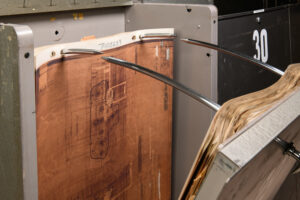
In 2002 the facilities manager at Peugeot, while clearing out the Stoke plant, was faced with a warehouse full of old Rootes documents and drawings that had to be cleared. As a car enthusiast, he reached out to the ARCC to see what could be done. That call was to change history and was the pivotal action in saving the archives of the Rootes Group.
The ARCC organised 2 large trucks and the entire warehouse was emptied and taken to the warehouse of a member of the Association who had kindly agreed to store it short term or, so he had thought…
Once unloaded the scale and historical value of the material collected were identified and in 2004, recognising the historical significance of what had been saved, the ARCC founded the Rootes Archive Centre Trust (RACT). This charitable trust was formally tasked with safeguarding the engineering archive for the long term.
RACT’s Official Aims:
The Trust’s charitable aims, as registered with the Charity Commission, are to:
- Preserve and promote the heritage of the Rootes Group and its successor companies.
- Support the remanufacture of classic car parts, ensuring that existing Rootes vehicles can remain roadworthy.
- Provide technical awareness to help future generations understand and maintain classic cars.
- Facilitate research by sharing archive data and information with historians and enthusiasts.
Archive Contents:
The collection is vast and invaluable, spanning six decades of automotive history. It includes:
- 150,000 full-size engineering drawings, showing technical designs for vehicles.
- 190,000 drawings on microfilm aperture cards, a vital record of Rootes’ engineering output.
- A photographic archive covering production, marketing, and events.
- Literature and company documentation such as manuals, brochures, and business records.
- Original artefacts from Rootes, Chrysler, and Peugeot operations.
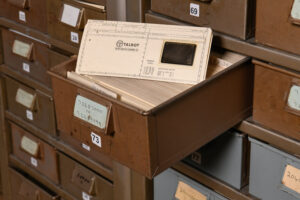
It was soon decided that such an expansive collection should be digitised to protect fragile records, improve accessibility, and enable easier sharing with the global Rootes community.
To undertake this extensive and vital work, the RACT reached out to our team here at Genus. With a reputation built on precision, security, and quality, Genus has worked to become one of the UK’s leading specialists in archival digitisation and a trusted partner within the historic vehicle community. Our experience includes major digitisation projects for Jaguar Daimler Heritage Trust, British Motor Industry Heritage Trust, Riley Cars Archive Heritage Trust, Rolls Royce, Lola Cars and many others.
With this in mind, and decades of experience in working with delicate, historically significant collections across heritage institutions, we were both confident and deeply honoured to assist RACT in their mission to save this key part of British motor history.
The project began with the digitisation of the aperture card collection – a large and technically challenging part of the archive.
Genus Digitisation Process:
- Collection & Transport
- The project began with the collection of the archive by a two-person collection team in our own specially configured vehicle which has been modified to include air-ride suspension, GPS tracking, deadlocks and fire extinguishers.
- Genus staff removed each drawer containing aperture cards from its cabinet and wrapped each one individually to prevent movement of the content during transportation.
- Each drawer was then carried down from the upper floor and loaded into our vans.
- Pre-digitisation Preparation
On arrival at Genus, the drawers were unloaded in a covered loading bay and moved directly into secure storage. Before scanning, each card was inspected and prepared:
- Cards were counted and recorded for reference.
- Dust and surface debris, often accumulated during decades of storage, were carefully cleaned.
- Orientation was checked and corrected; bent or folded corners were straightened.
- Cards too fragile or damaged were quarantined for manual capture later.

- Scanning.
- Scanning was performed using 11 Wicks & Wilson C400 Aperture Card Scanners, designed for high-quality digitisation of this specialist media
- Each card was scanned at 300dpi, producing highly legible images, even for very fine technical details.
- After scanning, image counts were compared to the physical card count, ensuring 100% capture accuracy.
- Quality Control & Return
- Every image went through a quality control process, checking legibility and imaging standards.
- Each image was manually indexed to include the drawing number. This ensures that in conjunction with the drawing register, every image can now be easily located and viewed.
- Completed drawers were wrapped and transported back to the archive.
- At the archive, Genus staff carried the drawers back upstairs, carefully replaced them in their original cabinets, and removed all packaging materials.
The Rootes Archive Centre Trust was fully satisfied with the results of the first stage of the project, which saw over 190,000 aperture cards expertly digitised by Genus.
Andy Bye, Trustee and chairman of RACT, stated:
“The quality of the aperture card scans is excellent. The file size is good, so storage space is reasonable. The whole scanning process from initial tender through to completion was easy with good communication and advice being offered at every stage by the Genus team.”
With this in mind the Trust made the decision to continue working with Genus to digitise the remainder of their vast archive, ensuring that every drawing, photograph, document, and artefact is preserved to the same high standard. This ongoing partnership marks a significant step in safeguarding the entirety of the Rootes heritage for future generations.