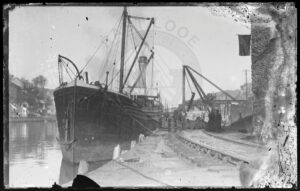
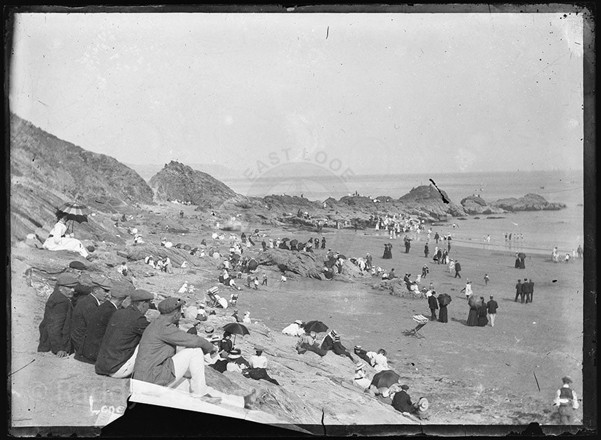
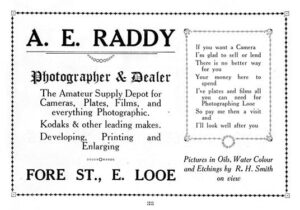
Alfred Ernest Raddy ran the mail from his birthplace in Liskeard to Looe and onto Polperro in the late C19th and C20th. His days started early to make the 6am train to Looe but after the mail was delivered Alfred would find himself waiting around until 5 o’clock for his returning train. Out of boredom he began taking photographs of what he saw on his wanderings, unaware that later generations would one day be looking through his eyes to understand the history of Looe.
In 1916, Alfred took his passion and set up a photographic supply shop on Looe’s Fore Street. For decades, his photographs were known only to the family, with just three ever shared publicly. The Collection itself was comprised completely of glass plate negatives making safety an imperative in the handling of the photographs. But with the upmost care from our team at Genus, this historic collection has now been made digital, meaning that for the first time the wider community can access Alfred Raddy’s unique glimpse into Cornwalls past online.
A Window into Cornwall’s Past
Looe’s identity has changed and developed over time. For those who lived there, it was a place of industry, with its busy fishing port. For holidaymakers, its charming seaside atmosphere offered an escape from the city. For others, Looe was, and still is, an artistic hub, with a creative culture dating back centuries. Artisans continue to showcase their craft today, from traditional Cornish carvings to vibrant contemporary art inspired by the surrounding landscape.
 The memories of Looe are rich and varied, and the Raddy Collection provides a fascinating record of each face of the town’s evolving identity.
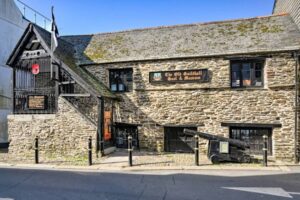
This remarkable collection is currently on display at the Old Guildhall in Looe, giving visitors the chance to experience these photographs. A preview of the collection can be viewed in their online gallery and print collection. Future plans also include offering the images as prints, postcards, and even jigsaws.
The Old Guildhall, dating back to around 1450, has a long and colourful history. Once a Guild meeting place, it became a magistrates’ court, council chamber, and jail before being converted into the town’s museum in 1974. Today, it tells the story of Looe from its smuggling past to its present as a tourist destination.
Run entirely by volunteers, the museum continues to expand its displays. Recent projects include an augmented reality model of Looe Island, showcasing its medieval history, tin trade, and smuggling connections.
The Digitisation Process
Genus was selected for this activity due to our extensive experience in the digitisation of culturally significant items. The studios and entire workflow are designed around the correct handling and curation of fragile and historic content, making Genus the perfect partner for the project.
Transporting a collection of this fragile nature had to be done with an extreme level of care. Genus’s transport consists of plain, non-sign-written vans with air-sprung suspension, GPS trackers, and climate monitoring. All of which ensure a safe journey for the glass negatives within the van. When the content is received at site, it is stored in our storage rooms where the temperature and humidity are tracked.
Upon receipt at Genus, the collection was appraised for condition and damage prior to being ingested into our environmentally controlled store. We began with professional DSLR cameras fitted with a prime macro lens, mounted above a professional-grade lightbox with uniform illumination, controlled colour temperature, and a high Colour Rendering Index (CRI). The cameras we use are operated in tethered mode, sending each capture directly to a colour-calibrated monitor. This allowed us to preview images instantly, check focus and exposure, and re-capture where necessary without additional handling of the plates.
After capture, the images were post-processed in Adobe Photoshop and Lightroom, where we applied colour corrections, carried out careful retouching, and ensured each image was processed within a managed tonal range. This prevented clipping or loss of detail, while our calibrated monitors guaranteed colour accuracy and consistency.
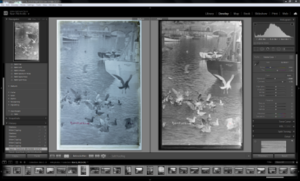
To meet the requirements of the East Looe Town Trust, we produced multiple file versions from the original Archive Master TIFF:
- A standard JPEG for general use.
- A watermarked JPEG for online publication.
- A copyright-embedded JPEG, with IPTC metadata applied for secure attribution.
This process not only preserved the delicate originals but also created versatile, high-quality digital files ready for long-term access and sharing.
Preserving Looe’s Heritage
The digitisation was made possible through funding from South West Museum Development, supported by Arts Council England and contributing local authorities.
For the East Looe Town Trust and its team of volunteers, this project represents both preservation and rediscovery. As the images are catalogued, they will progressively be made available for purchase through the Raddy Collection Print Store, allowing the public to own a piece of Looe’s history.
At Genus, we are proud to have played a part in bringing Alfred Raddy’s photographs out of the shadows and into the public eye. Seeing these images for the first time in high-quality digital form has been a rare and rewarding privilege.
You can hear more about this project on BBC Radio Cornwall’s Breakfast Show: “From glass plate negatives to the internet – how these fascinating old pictures of Looe are being rediscovered.”